Like

Dislike
Most people who arrive at this page have already been living with the problem for a while: teeth that are failing, a denture that shifts when you eat or speak, or a mouth that no longer feels like yours.
All-on-4 is a fixed, implant-supported solution that replaces an entire arch using four titanium implants, two placed vertically in the front of the jaw and two angled up to 45 degrees toward the back. That posterior tilt is the clinical key to the whole protocol. It lets the implants avoid the maxillary sinus and the mandibular nerve, distributes load across a wider span of bone, and is precisely what allows four fixtures to support a full arch without the extensive grafting that conventional implant placement often requires.
For patients who've been told their bone volume rules out implants entirely, that angled geometry frequently changes the answer.
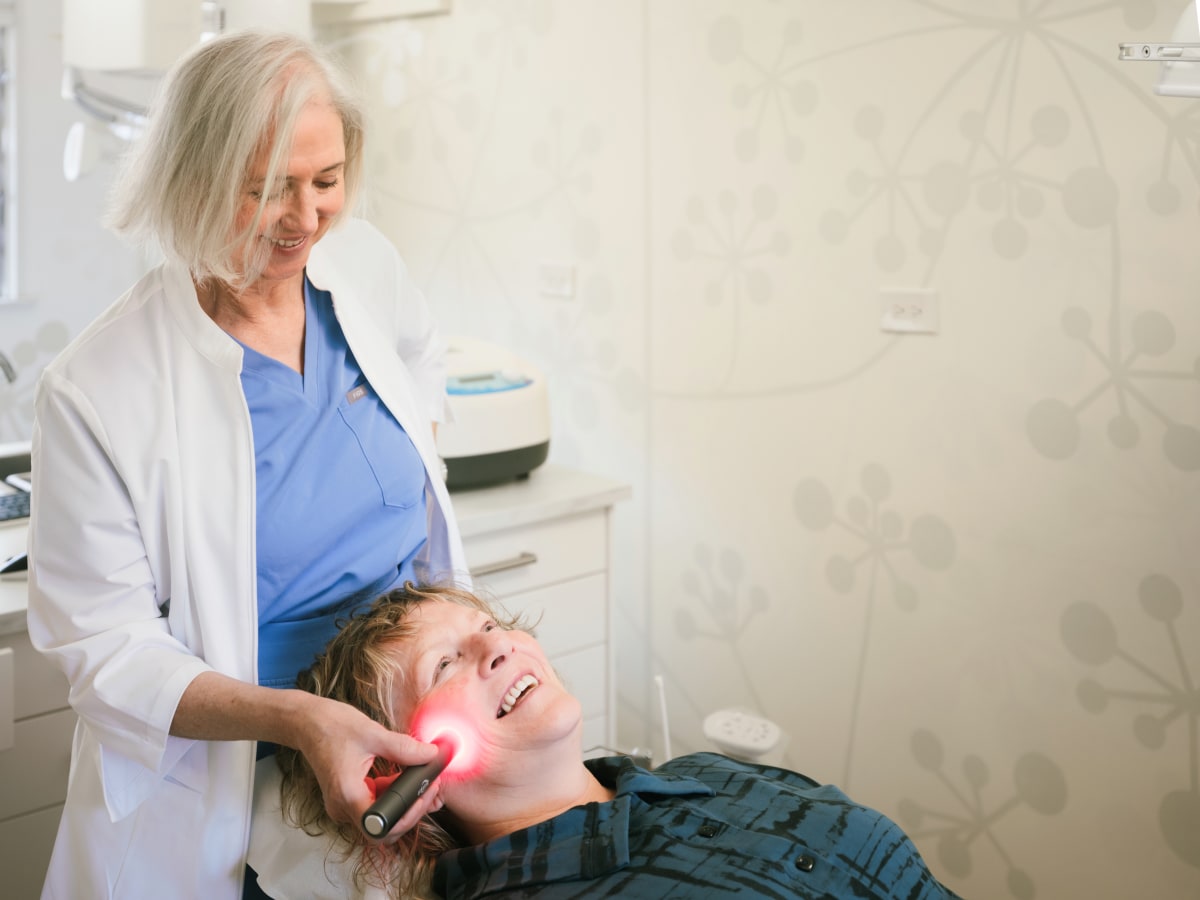
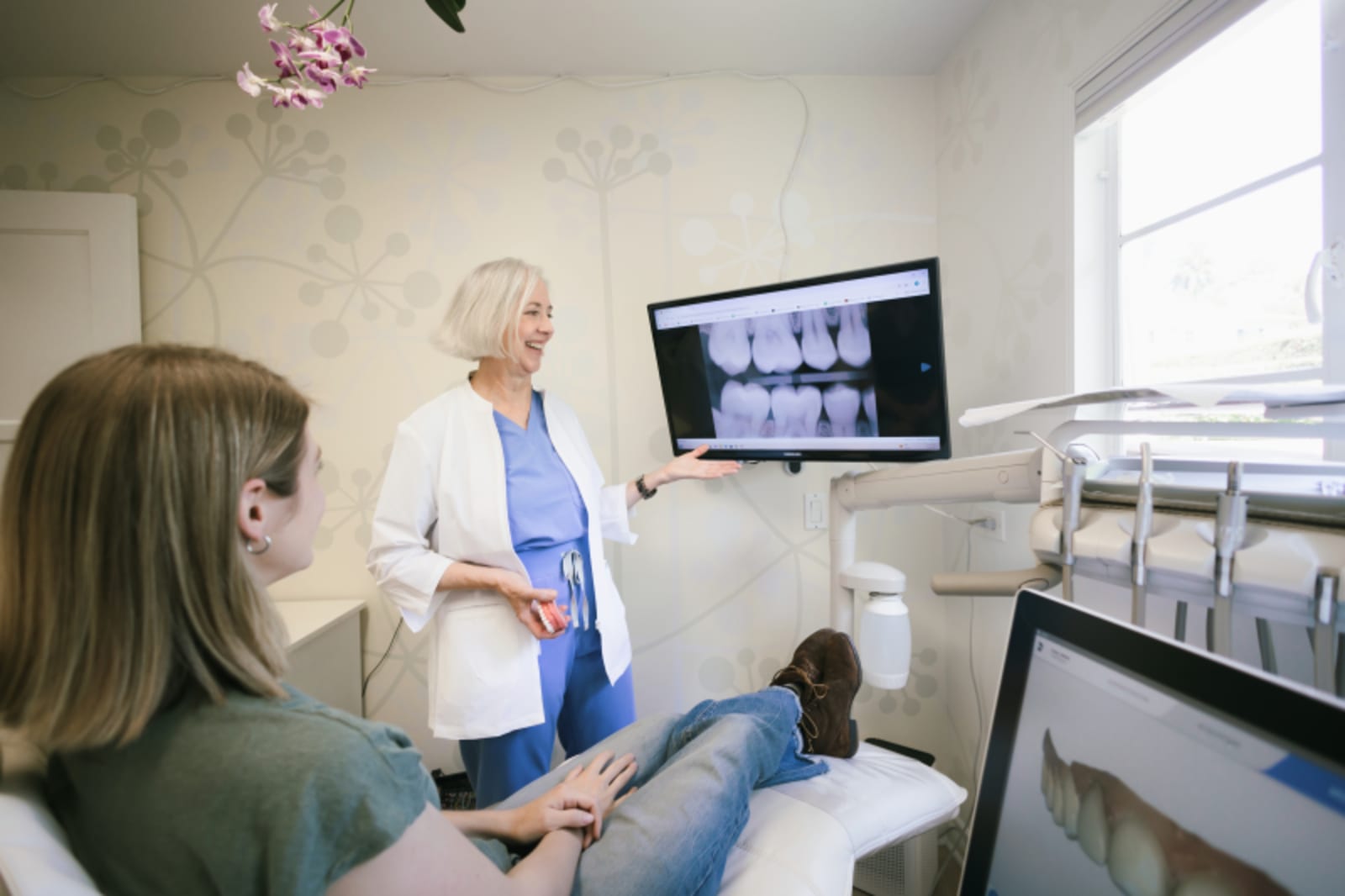
At Whole Health Dentistry, Dr. Copeland coordinates your full-arch care from the first conversation through your final restoration. Surgical placement is performed by a trusted oral surgeon she works alongside closely, while Dr. Copeland designs your prosthesis and handles most of your follow-up visits. She thinks about your case the way she would for her own family, which means your whole-body health is part of the picture from the start, not an afterthought once the teeth are in.
Ready to find out whether All-on-4 is the right fit for your situation? Call us at (805) 729-5480 to arrange a consultation.
The name describes the idea: a full arch of teeth supported by four implants. Two are placed vertically toward the front of the jaw, and two are angled up to 45 degrees toward the back. That tilt is what lets the posterior implants avoid the maxillary sinus and the mandibular nerve, and it's also what allows four fixtures to carry a full arch without the extensive grafting that traditional implant placements often require.
That angle correction is made possible by a component called an angled multi-unit abutment, which is the connector piece between the implant and the prosthesis, and it is a titanium part. Because the geometry of the protocol depends on that component, All-on-4 is inherently a titanium treatment. There is also a design detail worth knowing called platform switching, where the abutment is slightly narrower than the implant platform itself, and this helps protect the bone at the implant collar over time.
When you work with our Santa Barbara team, here is how the process unfolds from start to finish:
Nothing moves forward until you feel clear and ready.
All-on-4 does more than fill the space where teeth used to be. A fixed, implant-supported arch changes how you eat, how you feel in conversation, and how you think about your mouth from day to day. Here is what that actually looks like:
The question most people arrive with is simple and personal: could this actually work for me? For many people in Santa Barbara, the answer is yes, even after hearing no somewhere else. All-on-4 was designed specifically for situations where bone density isn't ideal. Because the posterior implants are angled to work with the bone you already have, patients who were once turned away from conventional implants often find they qualify here.
In general, this treatment tends to be a strong fit if you are:
That said, a few situations call for a closer look before moving forward. Active gum infection, uncontrolled systemic health conditions, or very limited posterior bone may mean we need to address those things first, or explore an alternative like a biocompatible ceramic bridge. Candidacy is always confirmed in person with Dr. Copeland, so you'll have a clear picture of where you stand before anything is planned.
A quick note to be aware of: All-on-4 is a titanium treatment. The angled abutments that allow four implants to carry a full arch are titanium components, and there is no ceramic equivalent for that part of the protocol. If keeping metal out of your body is the priority, you may need a genuinely different path. A full-arch metal-free restoration, what Dr. Copeland refers to as "Great on 8," uses eight zirconia implants placed in native bone and carries different bone volume requirements. Bringing that preference to your consultation shapes the entire conversation, and Dr. Copeland will tell you plainly which option fits your situation.
Knowing the full arc of treatment helps you decide with confidence and sets honest expectations about what healing actually involves. For most people, the process moves through four stages:
It helps to know what recovery feels like before you get there, so you can plan around it rather than be caught off guard. Most people experience some swelling and soreness over the first several days, with day two often being the peak. Soft foods like smoothies, scrambled eggs, and soups will be your staples while things settle, and having them stocked before surgery day makes those early days considerably easier.
The discomfort is manageable for most people, but there's no reason to push through it quietly. If something feels more intense than you expected, Dr. Copeland wants to hear about it. Staying in close contact during healing is part of how good outcomes happen, and that's exactly how she practices.
As the weeks pass, eating becomes more comfortable and the provisional teeth allow you to function and feel like yourself while integration finishes. Most of your follow-up visits during this period are with Dr. Copeland, so you're never left navigating the healing process on your own.
Preparation for this kind of treatment is straightforward, but a few things genuinely make a difference, both on surgery day and in the weeks that follow.
Once healing is complete, the implants and the tissue around them still need consistent daily attention. A fixed arch is not maintenance-free, and the habits you build early are what protect the result long term.
All-on-4 is a meaningful investment, and we'd rather be plain about that up front. There is no single number that applies to everyone; your personalized estimate is confirmed before your first visit, once Dr. Copeland has reviewed your bone structure, health history, and goals. What the investment at our practice covers is the prosthesis design, your provisional arch worn during healing, and most of your follow-up care. Surgical placement is performed by the oral surgeon we refer to and work alongside, and that portion is billed separately through their office. We will help you understand the full picture before you commit to anything.
We are an out-of-network practice, which means care is recommended based on what is genuinely in your best interest, not what an insurance plan will reimburse. Full payment is due at the time of service, and if you carry dental benefits, we provide the documentation you need to seek reimbursement directly from your provider. Most plans offer limited coverage toward implants, and we will help you understand what yours may apply. For financing, we accept all major credit cards and CareCredit.
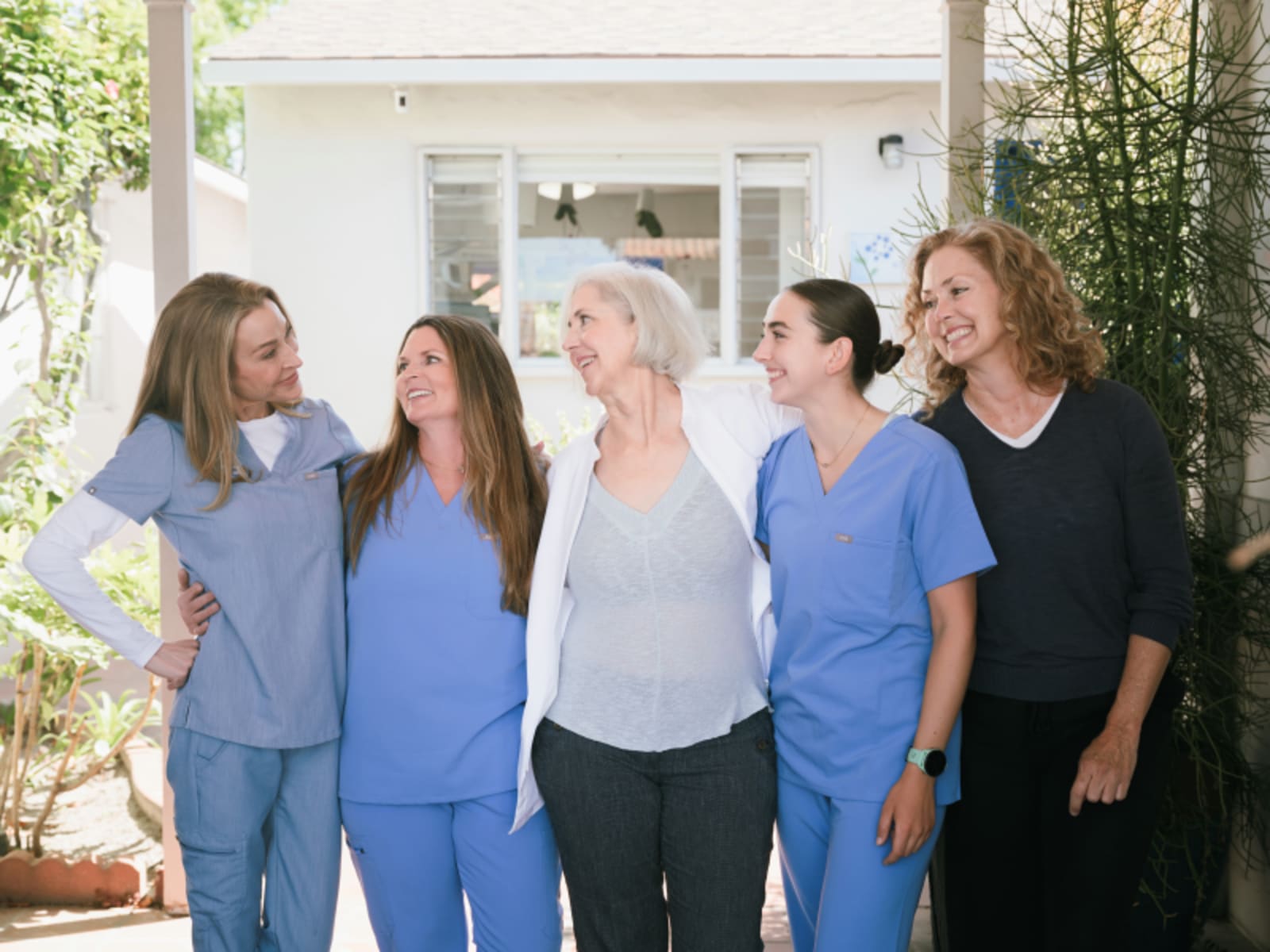
For people who've done their research, the difference usually comes down to one thing: feeling genuinely heard and considered as a whole person, not a chart entry. A question about materials or long-term health isn't brushed aside here; it's treated as meaningful clinical information, because that's exactly what it is.
A few things set this practice apart in ways that matter for a full-arch case.
You are not a chart number here.
Who actually performs the surgery?
Implant placement is performed by a trusted oral surgeon we refer to and work alongside closely. Dr. Copeland designs your prosthesis, coordinates with the surgeon throughout the process, and handles most of your follow-up visits, so you have a consistent point of contact from the first conversation all the way through the end of healing.
Why does All-on-4 use titanium instead of ceramic?
The protocol depends on angled multi-unit abutments, which are titanium components that correct the angle of the posterior implants so that four fixtures can carry a full arch. Because one-piece zirconia implants cannot be angle-corrected in the same way, the All-on-4 design simply is not achievable without titanium. The geometry of the protocol requires it.
Can I get a full arch without any metal?
Yes, though it is a different treatment with different requirements. Dr. Copeland refers to full-arch zirconia as "Great on 8" because it uses eight implants placed in native bone rather than four angled ones. Adequate bone volume, particularly near the sinus, is the key factor in determining whether that path is available to you. If it interests you, bring it up at your consultation and we will assess whether your anatomy supports it.
What if I've been told I don't have enough bone?
For All-on-4 specifically, limited bone is often not disqualifying. The posterior implants are tilted up to 45 degrees precisely to work with the bone that is already there, which is the reason the protocol was designed to reduce the need for grafting in the first place. A thorough evaluation will tell us whether your anatomy supports moving forward or whether a preparatory step makes sense before implant placement.
Will I leave with teeth the same day?
In most cases, yes. A provisional arch is typically attached the same day as your implant placement, so you are not without teeth while your jaw heals. Your final prosthesis, designed by Dr. Copeland, is placed once healing is confirmed and everything has integrated well. Before anything is scheduled, we will walk you through the exact sequence for your own treatment so you know what to expect at every stage.
Who do I see during healing?
Most of your follow-up visits are with Dr. Copeland and our Santa Barbara team. She monitors how the implants are integrating, checks the fit and function of your provisional arch, and stays in close contact with the oral surgeon if anything needs attention along the way. You are not handed off after surgery and left to navigate healing on your own.
If you've been researching full-arch tooth replacement, you've probably already worked through a lot of the questions on your own, and that instinct is worth honoring. Dr. Copeland is glad to take it from there. She'll review your bone structure, health history, and goals in full, walk through what All-on-4 involves and what it doesn't, and help you understand whether this is the right path or whether a different approach fits your situation better.
If you're also weighing a metal-free option before your visit, our dental implants page covers the zirconia options we work with, and the biocompatibility testing page explains how we think about material selection. Both are worth a read, and nothing has to be decided before you come in.
When you're ready, call us at (805) 729-5480 to arrange a consultation. We're at 1824 State Street in Santa Barbara, and we're genuinely glad to talk it through before you commit to anything.

Send Us a Text: 855.441.0001
Or click below to schedule an appointment online - our team is ready for you and ready to help keep your health the focus.