Like

Dislike
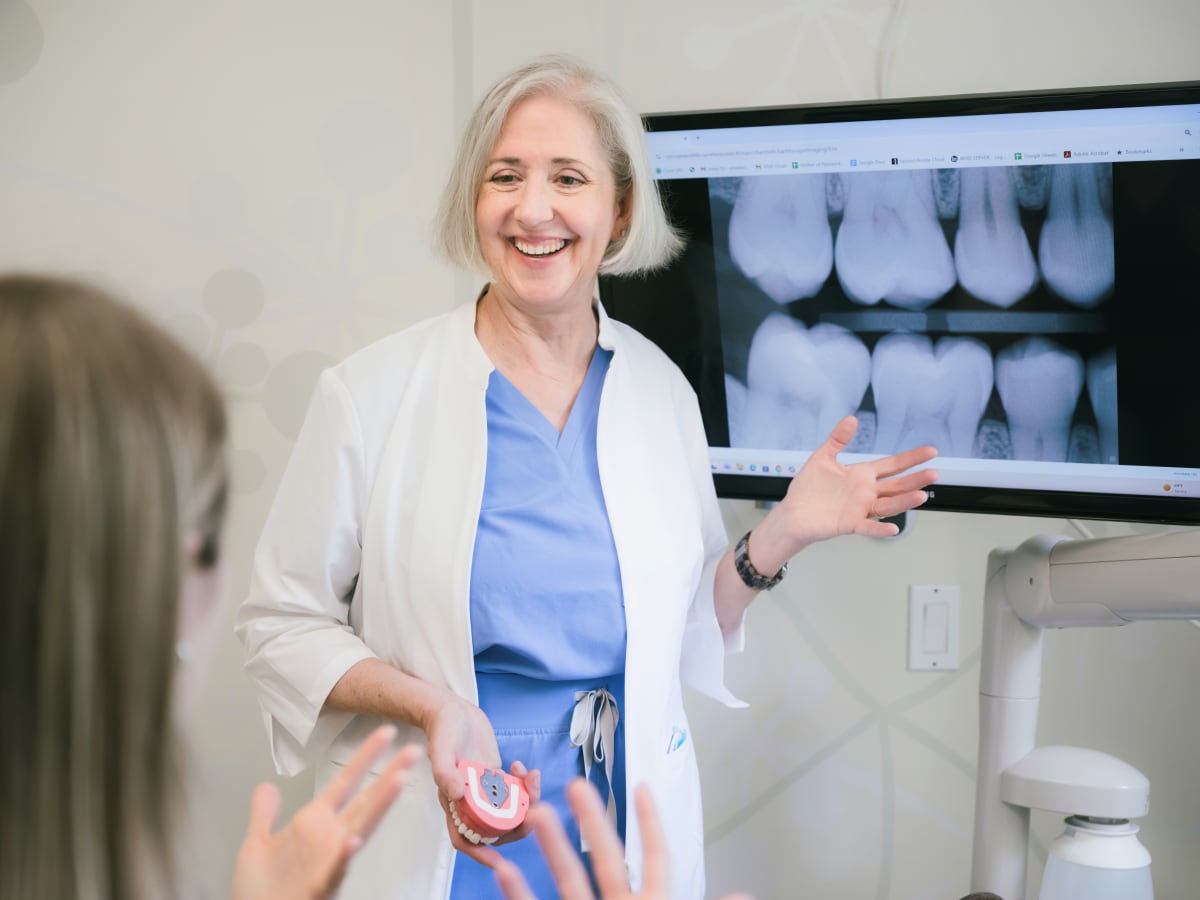
If you've been reading up on implants and quietly wondering what's actually going into your jaw, you're asking the right question.
Dr. Copeland and the team at Whole Health Dentistry place zirconia implants: a ceramic, completely metal-free alternative to conventional titanium. Zirconia is biocompatible, it doesn't corrode, and it doesn't conduct electrical currents or temperature the way metal does. It's designed to work with your body, not against it.
Zirconia can replace a single missing tooth. It looks natural at the gumline, it holds up to everyday chewing, and it fits the way many of our patients already think about their health.
If you're careful about what you eat and what you put on your skin, it makes sense to bring that same care to something permanent in your mouth. Because our biological approach considers your whole-body health, zirconia is a natural fit for patients who want to keep metal out of their bodies.
To get started, call our State Street office at (805) 729-5480 to book a consultation with Dr. Copeland.
Zirconia isn't the right answer for every situation, but for a lot of people it's genuinely worth exploring. You may be a strong candidate if any of these sound like you:
Age, general health, and daily habits all factor in, and there's no single profile that automatically rules someone in or out. If your bone is thin or a health condition needs sorting through first, we'll talk that through honestly and look at what makes sense in what order. The only way to know for certain is a thorough consultation with Dr. Copeland, where your bone structure, health history, and goals get considered together.
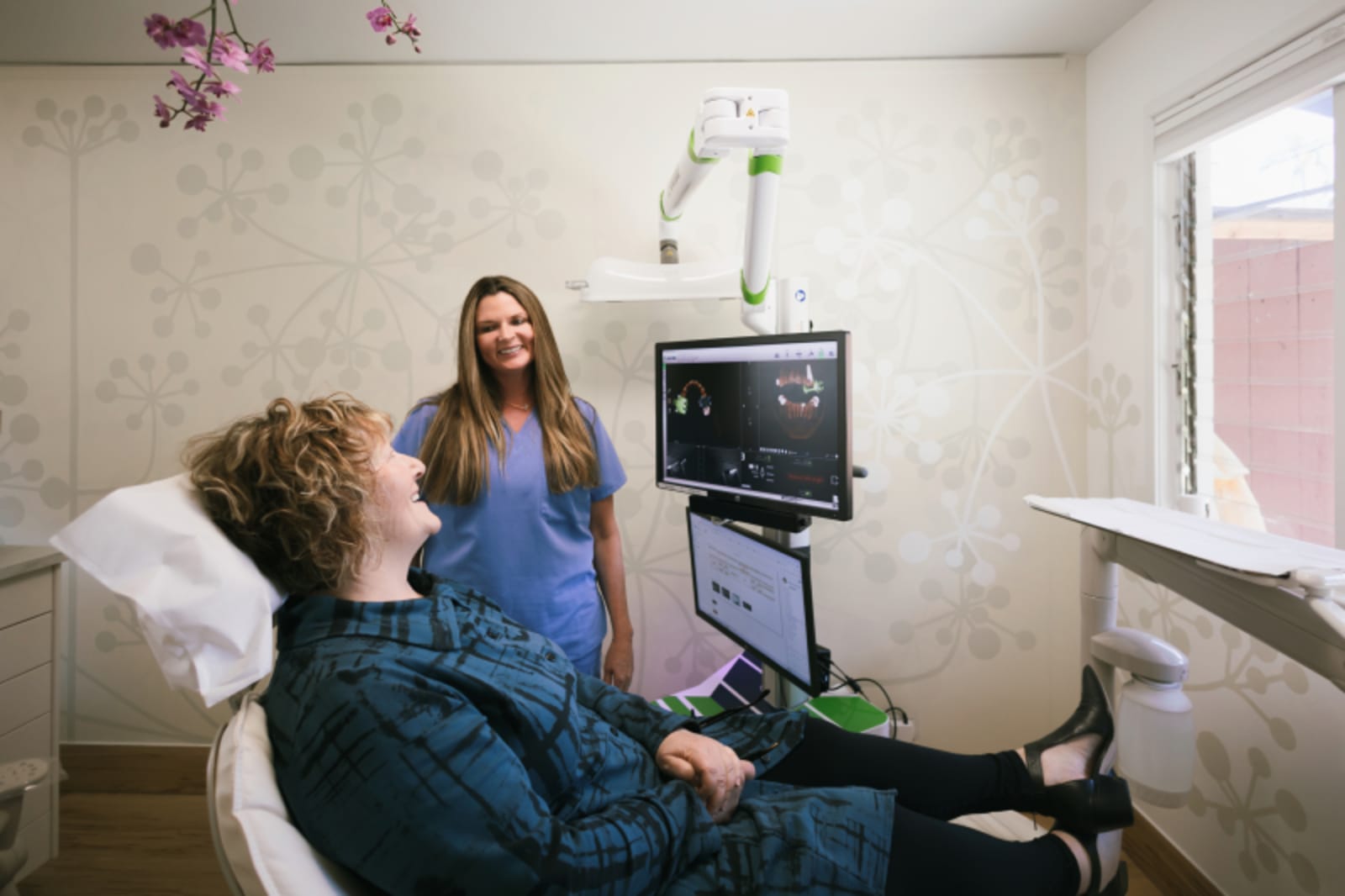
Knowing what happens at each step tends to take the edge off. We approach implants with the same whole-body lens that guides everything here, so your overall health picture is part of the conversation from the first visit. The work generally moves through four stages:
Our in-house CEREC lab and digital workflow keep the finishing stages efficient and precise, and Dr. Copeland's guided surgery planning helps the placement itself go smoothly.
Zirconia earns its place for reasons that go beyond avoiding metal:
A clear picture of the rhythm helps you plan life around treatment instead of just waiting and hoping. Zirconia implant care unfolds in three broad phases:
Some tenderness and mild swelling in the first few days is normal, and most people are back to their routine fairly quickly.
Watch for pain that lingers or worsens after those first days, unusual swelling, or anything that simply doesn't feel right. When something concerns you, we want to hear about it. No question is too small.
Before placement, the most useful thing you can do is share the full picture: your health history, medications, supplements, and any material sensitivities you know of. That's how Dr. Copeland plans around your body rather than a generic template. If bone support is part of your plan, we'll walk through that timing first — and it's worth knowing that bone grafting doesn't simply become bone. It holds space so your own cells can move in and rebuild over time. How well that happens depends on systemic factors: Vitamin D levels, key nutrients, hydration, stress, and your overall health. We look at the whole picture, and supplements or lab testing may be part of supporting your healing.
Afterward, gentle cleaning around the site matters throughout healing, and your care team will show you exactly what that looks like for you, including tools like a water flosser.
Once everything has settled, a zirconia implant is cared for much like a natural tooth: daily brushing, flossing, and regular checkups keep it healthy for the long run. This kind of tooth-preserving mindset carries beyond the procedure into how you support your body's own healing every day.
Zirconia implants are a premium restorative option, and it's fair to say so plainly. The total depends on your specific needs, your bone structure, and how many teeth are being replaced, so there isn't one number that fits everyone. What holds steady is our approach:
Dr. Copeland recommends treatment the way she would for her own family, based on what's actually right for you rather than what's easiest to bill.
We treat patients based on personal needs, not insurance coverage. If you carry dental benefits, we'll provide the documentation you need to seek reimbursement directly from your provider.
Full payment is due at the time of service, and we accept all major credit cards as well as CareCredit if you'd like to spread the cost over time.

Many people who find their way here have already felt rushed or dismissed elsewhere, or left unsure whether a recommendation was truly in their interest.
Dr. Copeland's background sits at the meeting point of dentistry and whole-body medicine: a Doctor of Dental Surgery, board-certified naturopathic physician, and IAOMT-accredited biological dentist with advanced training in surgery and implantology. That's not a common combination, and it's exactly why patients with complex or sensitivity-driven cases seek her out. A few things tend to stand out:
Zirconia is a ceramic, so no metal is placed in your body. For anyone sensitive to metals, or who simply prefers the most biocompatible route, that distinction is the whole point.
Zirconia is a dense, hard-wearing ceramic that handles the demands of daily chewing and biting. It's been used in dentistry for years and is a clinically sound choice for implant restorations.
Yes. Because the ceramic is tooth-colored throughout, there's no dark metal edge appearing at the gumline over time, and most people find the result blends seamlessly with the teeth around it.
You brush and floss it like any other tooth, plus keep up with regular checkups. For the full routine, including cleaning around the implant site during healing, see our care and preparation guidance above.
Prior implant experience doesn't automatically rule you out. A careful look at your bone health, gum tissue, and overall oral environment will clarify what's possible for your situation.
It's the biocompatible, ceramic-focused approach we use for placement, developed specifically around zirconia implants and whole-body healing. It guides how the implant is placed and how we support your recovery.
If you've done your homework and you're still not certain whether zirconia is right for you, that's exactly what a consultation is for.
Dr. Copeland takes time to understand your full health picture before recommending anything, because here your mouth and your body are never treated as separate concerns.
Give us a call at (805) 729-5480 and we'll find a time that works. You'll find us at 1824 State Street in Santa Barbara.

Send Us a Text: 855.441.0001
Or click below to schedule an appointment online - our team is ready for you and ready to help keep your health the focus.